
|
Picture of hinge action?
Hinge Action refers to the Flat Left Wrist producing that Motion by remaining Vertical to one of the three Basic Planes, i.e., Horizontal, Vertical or Angled.
Can someone draw me a picture of the statement above? The part that I am confused about is when it says vertical to the plane.Is there a different meaning to vertical than up and down? |
Jerry . . . Vertical in this context means 90 degrees . . .
So horizontal hinging would be holding your left wrist vertical to the ground while you move your arm back and forth like a door to your house or a helicopter vertical hinging would be holding your wrist vertical (90 degrees) to a vertical plane . . . your arm would move like an attic door . . . angled hinging would be holding your wrist vertical to the inclined plane . . . like a paddle or one of them bomb shelter doors. So the hinge pin . . .which is in your shoulder is mounted VERTICAL . . 90 degrees . . . to the plane of motion . . . but with vertical and horizontal hinges you have to have ANOTHER HINGE to lay the motion ON THE INCLINED PLANE . . that's why you have DUAL HORIZONTAL AND DUAL VERTICAL . . . dual representing two hinges . . . one hinge perpendicular to the associated plane (horizontal plane or vertical plane) and the other hinge to lay the blade of the hinge (left arm) on the INCLINED PLANE . . . See the pictures 10-10-C thru E . . . you'll see what I'm talking about . . . you DON'T need the second hinge to lay it on the plane with angled so you don't have "dual" angle . . .no need for the second hinge because the motion is already on the inclined plane. Hinging is actually with the WHOLE ARM . . that is the full blade of the hinge . . .Homer just focused on the wrist because it could be verified in terms of what it was vertical (90 degrees) to . . . (ground, wall, inclined plane) . . . you'll note in the 10-10-C thru E pics the two theoretical hinges in the left shoulder . . . one is like a door hinge the other is like a lose nut and bolt that allows the blade of the hinge (left arm) to be laid on the plane. but to answer your question . . . vertical is vertical to the ground with horizontal . . but 90 degrees to a wall with vertical hinging and 90 degrees to the golf plane (roof) with angled hinging . . . Holla. |
Hinge Action Basics
Quote:
Three Hinge Actions explained in one post. :shock: Hinge Action . . . A monumental concept -- Clubface Control -- that will change (and challenge) the golfing lives of all who understand it. I've done my best to explain it in dozens of posts -- plus videos -- since 2004. Our efforts are cumulative. Which blow fells the oak? Who cares? :salut: |
Nice one Bucket. The word "Perpendicular" works nicely too.
I agree Jerry , pictures are best when it comes to describing geometry. Words often make matters seem more obtuse. Imagine studying high school geometry but in words only, no diagrams. If I could ask Yoda for one thing this christmas it would be for more diagrams. Take for instance 1-L-21: Quote:
Homer gave us a few diagrams, but I do wish he'd given us more. Even the geometry of the circle was not illustrated in the book. By the way, there's one right there....... the geometry of the circle , in 2D can lay flat against the Inclined Plane. Somebody could draw that easily. How 'bout the law of the triangle? Or how the bending right elbow cocks the left wrist or Single Horizontal as a non planar, cone shaped motion or or .... Perhaps Homer thought it was all obvious? |
Quote:
My next question was going to be, can I substitute perpendicular for vertical? thanks everybody- I am not giving up on this hinge concept. |
It Ain't Necessarily So
Quote:
In fact, when I choose to discuss these things with students . . . I use the term perpendicular (relationship of the Flat Left Wrist to one of the Three Associated Planes) all the time. But, only after I've used the term Vertical, and then only because students relate more easily to perpendicular than to vertical. And then I explain the difference. Now, why all the bother? Assuming an intelligent golfer who wants to know -- indeed needs to know -- the answer is simple . . . In the constructive vocabularly of The Golfing Machine, the term Perpendicular relates to the Wrists' overall up-and-down plane of Motion (Level, Cocked and Uncocked). The term Vertical relates to the mid-condition of the side-to-side Rotational Motion (Vertical, Turned and Rolled). Then, answering your question here, when we relate the Left Wrist to a given Plane of Motion -- Horizontal, Vertical or Angled -- we can do so in its Rotational frame of reference. Namely, Vertical, i.e., neither Turned nor Rolled. Hence, Vertical to the Ground (a Horizontal Plane) describes the mid-condition of a Rotational Motion, not Level, the mid-condition of a Perpendicular Motion. Screwy stuff, I know. But when you're a teacher helping your student get results . . . Precision matters. The Wrists have Three Planes of Motion (Horizontal, Perpendicuar and Rotational). Within these are three sets of three -- Flat, Bent and Arched; Level, Cocked and Uncocked; Vertical, Turned and Rolled -- with the first term indicating the mid-condition within each Plane. Most of the time, except as he needs to on this particular day, the student never knows. But, the teacher knows. And, so does the Ball. That's a good thing! :salut: |
Quote:
Vertical hinge: No roll Angled hinge: Half roll Horizontal hinge: Full roll (90*) - on the inclined plane. |
Quote:
|
Quote:
nb 'new boy on the scene' the quality of this answer is highly questionable :-) |
Quote:
|
Hinge Action -- From Mechanics To Feel
Quote:
Quote:
The Left Shoulder Hinge Pin is theoretical. The Left Wrist held Vertical to one of the Three Basic Planes is practical. The two meet as Educated Hands and the Feels of Roll, No Roll and Reverse Roll. Vive la Mechanics! Vive la Feel! Viva la forevermore the translation of the one to the other! :salut: |
Quote:
i'll work on the educated hands think i made a little breakthrough with the basic motion after watching the Brian Gay video yesterday, getting the hips in on the deal now |
Though the section on Hinge Action and the diagram of the Machine in 1-L depict the Hinge as being located at the swing center, the left shoulder, any of the Three Zones can reproduce Hinging ......and as if it were done at the shoulder.
Billy Casper had a very effective Zone 3, Hands only Vertical Hinge putting stroke for instance. Id venture that most pros today use a Zone 1 (Paw Minor Basic Stroke) Shoulder Stroke with Angled Hinging. Homer was all about categorization so I guess you could say that any of the Three Zones on their own or any combination there of, could reproduce a Hinge Action. The Machine of 1-L reveals the basic geometry only. The geometry of a "Hinge Action of an Angular Motion on an Inclined Plane". Homer didnt want us, Humans, to try and swing like his Machine! That is not what the book is about. The Machine can not " swing from the feet" for instance, or shift its weight, or tilt it shoulder axis or or or. But the geometry of the Machine holds, profoundly. |
Quote:
Horizontal hinging is a biomechanical action where the swinger rotates the back of the left hand leftwards so that the flat left wrist moves around to the left while remaining vertically oriented relative to the ground - in other words, the flat left wrist, which remains vertical to the ground, rotates to the left like a door opening. The AJ Bonar photo gives a swinger the impression that the left wrist rollover occurs at the level of the wrists/hands. However, that is totally incorrect! The roll over action must occur at the level of the left shoulder socket, and the entire left upper arm, left forearm, left wrist and left hand must rotate around to the left as a single unit - at the same rpm as the rotating clubshaft/clubhead. This explanation becomes clearly understandable if you consider the next photo of Anthony Kim's horizontal hinging action. Image 1 shows Anthony Kim at impact and image 2 shows Anthony Kim at the end of the followthrough (defined as the time point when both arms are fully straight and all the power accumulators have fully released). Note that the clubface has rotated 90 degrees to the left so that the clubface (and back of the left hand) is vertical to the ground. What causes this 90 degree rotation of the back of the left hand and clubface? The answer is clearly discernible in the above photos. Image 1 shows Anthony Kim at impact. Note that he has a strong left hand grip, which means that his flat left wrist/back of left hand is not quite facing the target at impact. Note that one can clearly see the back of his left forearm and note that the radial border of his left forearm is still facing slightly rightwards. Note what happens to his left forearm during the followthrough - the back of his left forearm rotates counterclockwise (as viewed from above) so that it faces the target at the end of the followthrough and the radial border of the left forearm faces the ball-target line. The left forearm's counterclockwise rotation is not due to any independent left forearm rotatory movements, but it is due to an external rotation of the left humerus (bone of the left upper arm) in the left shoulder socket joint (which has itself moved upwards during the followthrough phase of the swing - thereby making it easier for external rotation of the left humerus to occur naturally). Note that the left upper arm has rotated to the same degree as the left forearm, and that the left forearm has rotated to the same degree as the flat left wrist, and that the flat left wrist has rotated to the same degree as the clubface. That's what happens in a horizontal hinging action - the entire left upper limb rotates as a single unit at the same rpm as the rotating clubface, and the rotation occurs as if there is vertical hinge joint at left shoulder socket level thereby allowing the entire left arm unit to rotate horizontally like a door opening. If a swinger understands this biomechanical phenomenon, and understands that the left hand controls the clubface during the followthrough, then he can control the horizontal hinging action during the followthrough phase of the golf swing. http://perfectgolfswingreview.net/power.htm you can see the pics of Kim some 3/4 the way down (big article & quite a good one from what little i know of TGM) |
Tim ,if I may, there's no such thing as a perfect golf swing, so Im not sure how it could possibly be reviewed. I'd take those internet golf sites with a grain of salt if I were you, they're full of cooks and nut bars who operate under assumed names. How much credibility should one attach to those who choose to remain anonymous, I ask?
Regards O.B.Left |
Quote:
In theory I guess you could talk about a perfect swing..just like "The Left Shoulder Hinge Pin is theoretical". Didn't Hogan say that in a whole round of golf he (only) had 3 perfect shots (of let's say 67 ). |
Quote:
as it happens i have been known to wander off down tracks that lead to places you wouldn't want a golf game to go :-) |
Quote:
|
I agree, O.B. This is home for TGMers. I have to admit, though, I appreciate Jeff Mann's tirelss efforts.
|
Quote:
http://www.ustream.tv/recorded/10886488 Maybe that's a good idea for Yoda to try out - answering questions or pointing out something important for the viewers. Or maybe not? J.M hasn't any forum. Just a thought. |
Quote:
It's all about his medication. Either he's taking "too much" or "not enough". My understanding is that the Professional Bowlers Association bought him a set of Golf Clubs about ten years ago and that they're very, very, happy about the purchase. Maybe we can start a collection and buy him a Frisbee. :shifty: |
Quote:
|
Quote:
|
Quote:
The clubface can ONLY make 3 motions...period....respectively each motion has an associated PLANE OF MOTION 1. CLOSE ONLY-motion of the clubface in the Horizontal Plane only (no layback) 2. LAYBACK ONLY-motion of the clubace in the Vertical Plane Only (no closing) 3. CLOSE AND LAYBACK-Motion on an Angled Plane...(closing and layback SIMULTANEOUSLY) Hinge Pin always vertical to the "associated" Plane...there are 3...Vertical, Angled (of which there are "infinite" varieties) and Horizonta...so of the 3 Basic Planes there is ONE Vertical, One Horizontal and many Angled.... So you can see how the motion would work if you positioned the pin at 90 degrees to the plane of motion you select....  True Vertical (trap door movement...or attic door)...so the plane is VERTICAL so the hinge pin by definition is position vertical (at 90 degrees) to the associated plane in this case the plane is VERTICAL the hinge pin is positioned at 90 degrees thus horizontal... 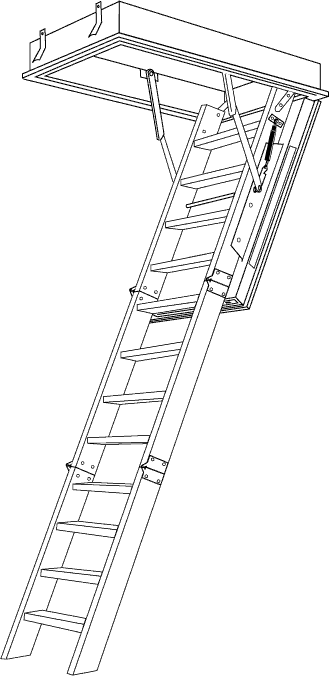  Horizontal ... the plane is horizontal...parallel to the ground ...thus the hinge pin is positioned at 90 degrees to the plane of motion thus vertical to the ground...  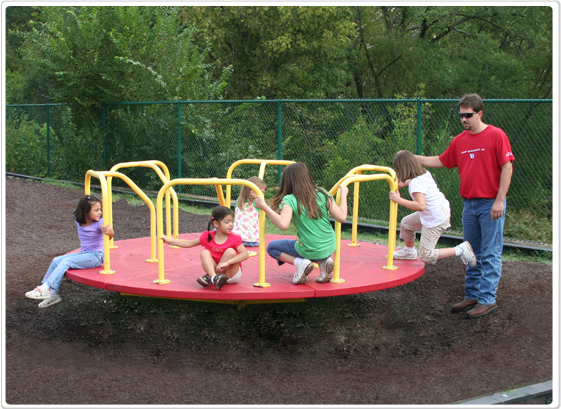 Angled Hinging....pin positioned at 90 degrees to the selected Angled Plane...  |
Quote:
 http://www.youtube.com/watch?feature...&v=sGtV0ja-6Tg Couldn't figure out how to get the video to show up...but you can click it... |
So now that you got your clubface motions on the Basic Planes...obviously you play golf on an INCLINED PLANE...so you have to get these motions on the INclined Plane....
The hinge is at the left shoulder....the blade is the entire left forearm flying wedge.....but the focus on the flat left wrist...that is the portion of the "blade" that you focus on to execute your hinge motion... Angled Hinging is conceptually easy to get...you just postion the pin vertical to the inclined plane and boom you got it...  But with motion in the Horizontal Plane and Vertical Plane... it's different you gotta get these MOTIONS to HAPPEN ON THE INCLINED PLANE....thus you gotta have TWO HINGES....ONE THAT SETS UP THE BASIC PLANE OF MOTION...AND ONE THAT ALLOWS THAT MOTION TO BE LAID OR PLACED ON THE INCLINED GOLF PLANE... NOTE THE TWO HINGES ON THE BASIC MACHINE....THE ANGLED HINGE IS RESPONSIBLE FOR LAYING THE BLADE (CLUBSHAFT) ON THE FACE OF THE PLANE...AND THE SECOND HINGE IS RESPONSIBLE FOR THE ACTUAL HINGE MOTION... YOU HAVE TO HAVE DUAL HORIZONTAL AND DUAL VERTICAL....REASON FOR DUAL IS IT REQUIRES TWO HINGES TO GET THE BASIC PLANE OF MOTION TO BE PERFORMED ON THE INCLINED PLANE....  NOTE THE TWO HINGES AT THE SHOULDER JOINT...THE BASIC PLANE OF MOTION HINGE AND THE "ANGLED" HINGE THAT IS RESPONSIBLE FOR PLACING THAT BASIC MOTION (HORIZONTAL OR VERTICAL) ON THE INCLINED PLANE... |
Thank you for your time and effort.
|
Great posts 12 piece bucket ! I love the video too.
|
1 Attachment(s)
Mike O sent me a photo of the Three Basic Planes a few years back when I was just getting into TGM . HOpe he doesn't mind me sharing. He made sure I got things right.
Great guy, very helpful. Now if you need help with Triple Horizontal just email Daryl........luv you D. http://www.lynnblakegolf.com/forum/a...d=132572264 9 |
| All times are GMT -4. The time now is 05:26 PM. |